To get brand deals on a faceless channel: show brands your average views and who watches, not your follower count; pitch companies that already advertise to your audience; offer a short where the product is part of the story, in your characters' style; and price it per 1,000 views you can show. You don't need a face. The characters do that job.
Brands pay for attention from a specific group of people. A faceless animated channel can sell that just as well as a creator who talks to camera, and sometimes better, because the brand gets an animated ad in a look its own team couldn't make.
What brands actually buy
A sponsor isn't buying your followers. It's buying three things:
- Views from the right people. A sleep app wants people who scroll at 1 a.m. A channel about late nights has them.
- Something its own ads can't do. A product folded into a story your viewers already like doesn't feel like an ad.
- The video itself. Many brands want to run your short as a paid ad afterwards. That's worth extra (see pricing below).
Your face is in none of those. What a brand will check is whether the views are real and whether the audience matches.
Step 1: Have something to show
Start pitching once you have a handful of shorts above 100,000 views and a niche a brand can name in one sentence. Before that, spend the time on the channel; here's how to start one.
Make a one-page media kit:
- One line on what the channel is and who it's for.
- Average views of your last 10 shorts, per platform. Not the best one; the average.
- Your top three shorts with their view counts and links.
- Audience: countries, age and gender split, from each app's analytics.
- What you offer (below) and a price, or "from".
Two screenshots of real analytics beat any design. Don't round up; brands check.
Step 2: Find brands that already pay for your audience
The best leads are companies already spending on ads to people like your viewers. Two free places to look:
- TikTok Creative Center lists top-performing ads by industry and country.
- Meta Ad Library shows every ad running on Facebook and Instagram; search your niche's words and see who keeps paying for it.
A brand with ten ads running in your niche has a budget and knows what it wants. Also note who sponsors the creators next to you: they've already said yes to creator deals once.
Then the marketplaces, where brands look for creators:
- TikTok One (it used to be the TikTok Creator Marketplace).
- YouTube BrandConnect, for channels in the YouTube Partner Program where it's available.
- Instagram's partnership tools in the professional dashboard, in the countries that have them.
Marketplaces bring smaller deals and more competition. Your own pitch to a brand you chose usually pays more.
Step 3: Pitch a story, not a slot
Most pitches say "I'll mention your product for $X". Yours can say something better: "here's a short where your product is the turn."
Say your channel is about cats who pretend they don't care. A pet camera brand: the cat waits by the door, the owner checks the camera from work, the cat instantly stops waiting and looks bored. The product is the joke. Viewers share it for the joke, and the brand gets a short people send to each other, which is the thing every brand wants and few get.
A short pitch email:
Subject: A short for [brand] in the style of [channel]
Hi [name], I run [channel], animated shorts about [topic] for [audience]. My last 10 shorts average [N] views on [platform]; this one did [N]: [link].
An idea for [product]: [the story in two sentences, with the product as the turn].
I can make it in [style], post it on TikTok, Reels and Shorts, and send you the files to run as an ad. Price from [$X]. Can I send a first sketch?
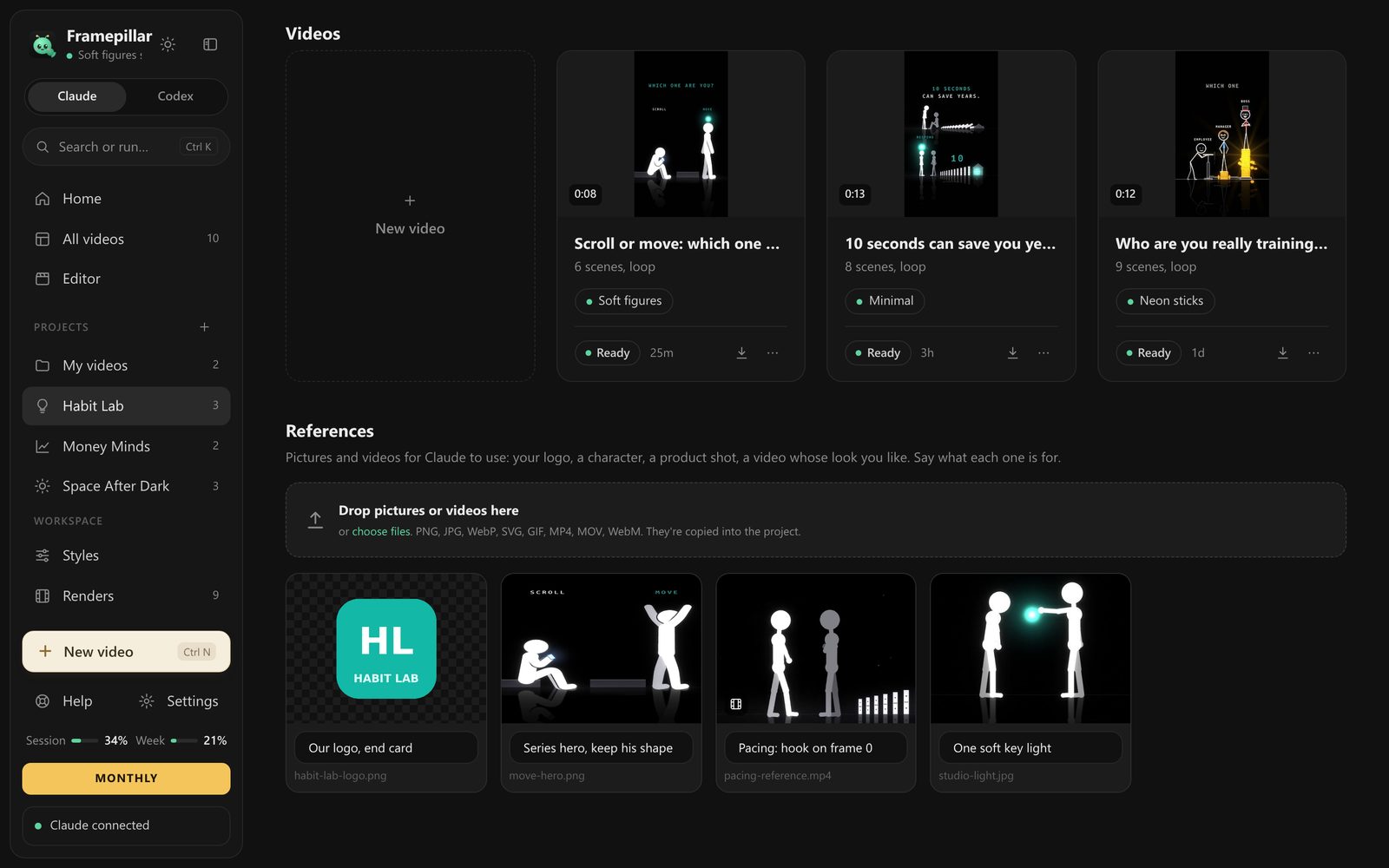
Offering a sketch is cheap for you. In FramePillar, one sentence and a style gets you a contact sheet (one still per scene) in a few minutes, so you can show the brand its product in your characters before anyone pays.
What goes wrong: pitching your favourite brands instead of the ones your audience buys from. Match the audience first.
Step 4: Price it
There's no list price, and anyone quoting you one number is guessing. Price from your own average views:
- Take the average views of your last 10 shorts.
- Pick a price per 1,000 of those views.
- Add for extras: a paid-ad licence, more platforms, a second cut, exclusivity in the category.
Worked example, with made-up numbers: an average of 80,000 views across three platforms, at $15 per 1,000 average views, is $1,200 for one sponsored short. Adding a 30-day licence to run it as an ad (on TikTok that's a Spark Ad, on Instagram a partnership ad) could add half again.
Quote it, see the reply, adjust. If every brand says yes at once, you're too cheap.
Step 5: Label it
Every sponsored post has to say so. In the US that's the FTC's rule, and other countries have their own. Each platform has a switch for it:
- TikTok: turn on Content disclosure, then Branded content.
- Instagram: add the Paid partnership label and tag the brand.
- YouTube: tick My video contains paid promotion in the video's details.
Put "#ad" or "Sponsored" in the caption too. It costs you nothing, and an unlabelled ad can get the post taken down.
Step 6: Deliver like an agency
Agree in writing on: what the brand approves (the idea, the contact sheet, the final), how many changes are included, when it goes live, and how long they can use the file. Send the TikTok cut, the Reel cut and a cover.
A week after posting, send the numbers: views, watch time and shares per platform. Brands rebook creators who report without being asked.
Questions
Can a faceless channel get sponsors?
Yes. Brands buy reach and fit. An animated channel with a clear audience and steady views gets sponsors the same way a talking-head channel does.
How many followers do I need for brand deals?
There's no minimum for direct deals; views and audience matter more. Marketplaces have their own rules, often a few thousand followers and an age limit of 18.
How much should I charge for a sponsored TikTok?
Price per 1,000 of your average views, then add for an ad licence and extra platforms. Start where you're comfortable and raise it when brands stop saying no.
Should I use AI to make the sponsored video?
Yes, if the product is drawn right and the brand approves it before you post. Show them the contact sheet first. The other ways faceless channels earn are in how to make money with AI animated shorts.
Not a promise of earnings. Results vary and depend on your work.