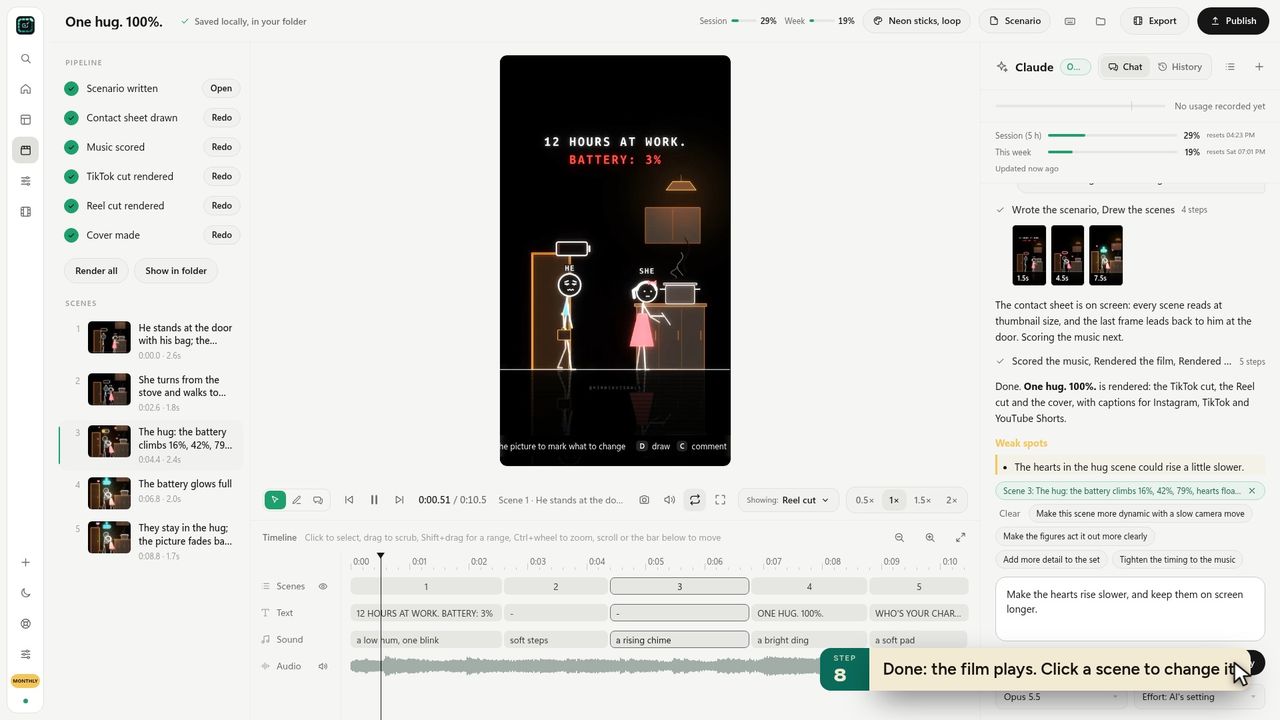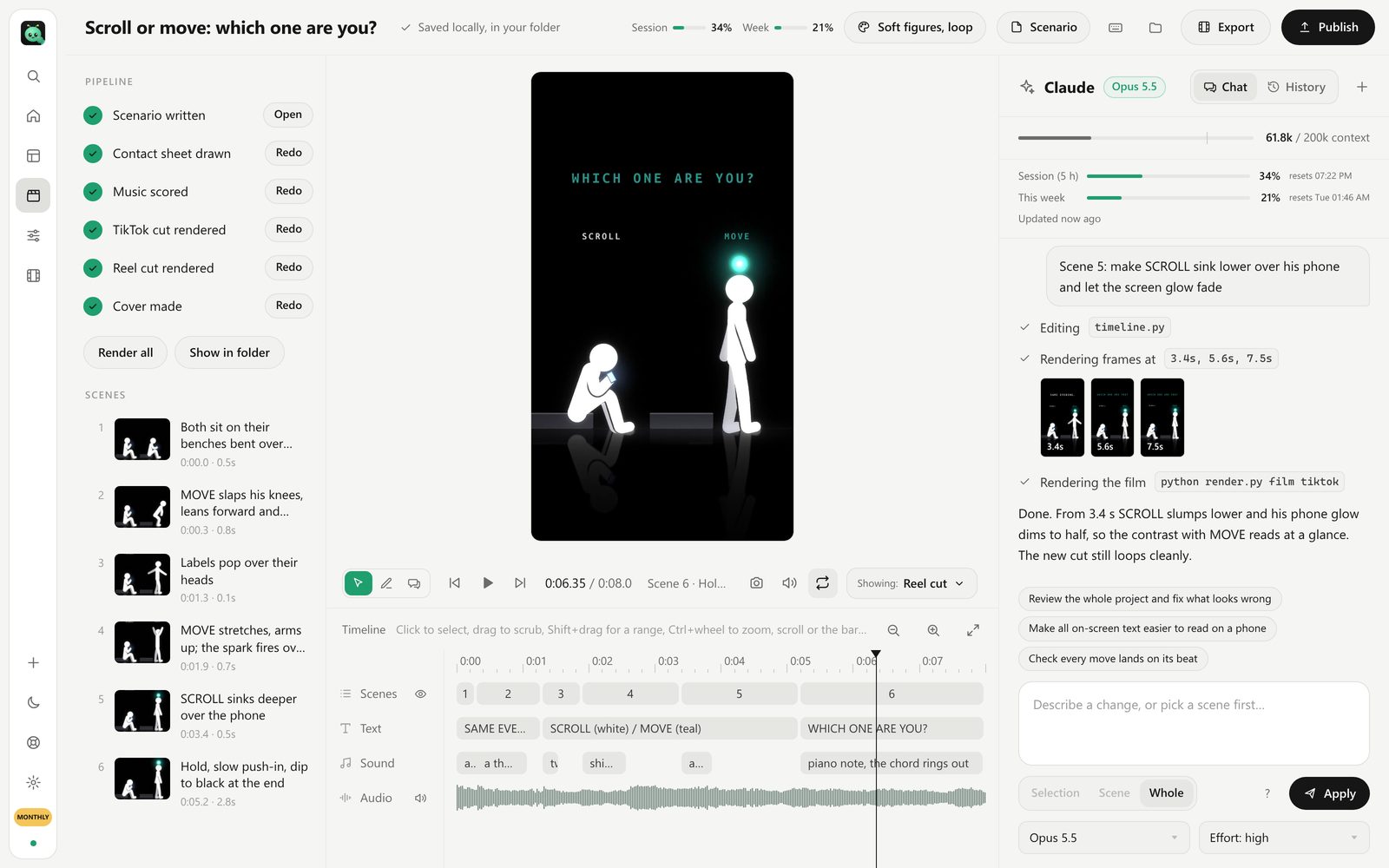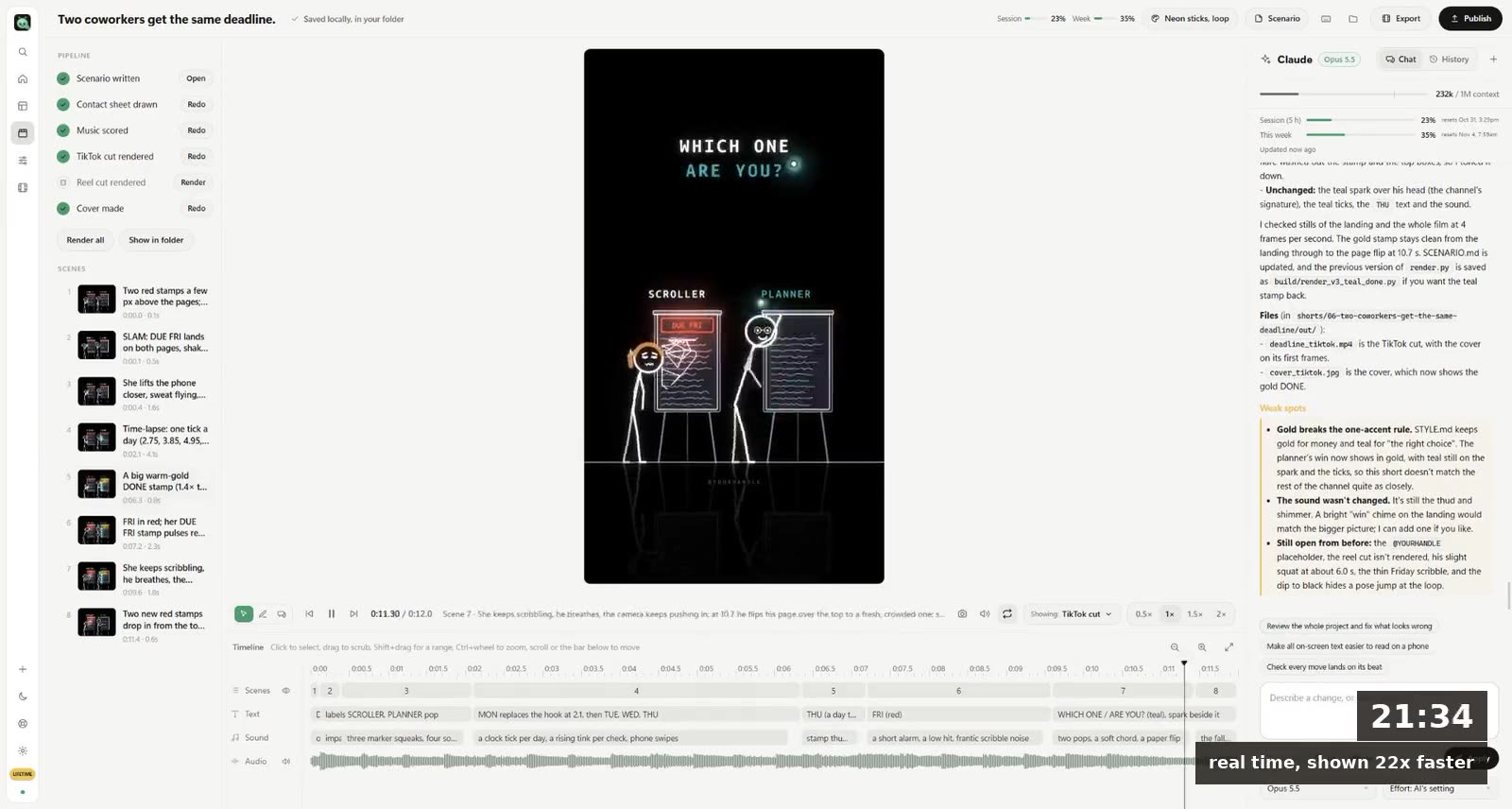
TikTok, YouTube and Instagram all label AI videos now, but none of them bans them. TikTok asks you to label realistic AI content, YouTube asks you to disclose realistic altered or synthetic videos, and Meta shows an "AI info" label. What gets a channel pushed down isn't AI. It's videos that look mass-produced or copied. An animated short with its own idea is fine on all three.
"AI slop" is the internet's favourite insult, and every platform has made a show of cleaning it up. Here's what the rules actually say, and what that means for a channel of AI-made animation.
What each platform asks
| TikTok | YouTube | Instagram and Facebook | |
|---|---|---|---|
| What you must label | AI content showing realistic people, scenes or audio | Realistic content that's altered or synthetic | AI content that looks real (Meta also labels on its own) |
| How | AI-generated content setting when you post | Altered or synthetic content in the upload details | AI info / "Add AI label" when you post |
| Labels on its own | Yes, from content credentials (C2PA) some AI tools embed | Yes, for some content | Yes, from industry signals in the file |
| Cartoons and animation | Clearly unrealistic content is lower risk; label if unsure | Clearly unrealistic or animated content doesn't need disclosure | Label if it could pass as real |
The word that matters in every rule is realistic. All three are worried about AI videos people could mistake for real: a fake politician, a fake disaster, a cloned voice. A stick figure carrying a battery isn't that.
Will an AI label hurt your views?
None of the three says the label itself lowers reach. What they do push down is described differently on each, and none of it is about the label:
- YouTube renamed its "repetitious content" rule to inauthentic content in July 2025. Channels of mass-produced, near-identical videos can be refused or removed from the Partner Program. We go through it in can you monetize AI videos on YouTube.
- Instagram said in 2025 that it favours original content and will show the original instead of reposted copies in recommendations.
- TikTok pays Creator Rewards only for original videos, and weighs originality when it works out what a view is worth.
So the risk for an AI channel isn't the AI. It's sameness: the 500th "motivational quote over a stock sunset", or the same template with the words swapped.
Why animated AI channels are in the safe part
Three things put a channel like ours on the right side of every rule above:
- It doesn't pretend to be real. Glowing stick figures, comic panels, paper cut-outs. Nobody mistakes them for footage.
- Every video is its own story. One idea, one turn, written for that short. Our biggest one, "Who holds your rope?", reached 9.3 million views on Instagram in five days; there's no other video like it on the channel.
- The look is the channel's own. One style, used every time, so the channel reads as made by someone rather than spat out by a template.
There's a technical difference too. Video models (Sora, Veo, Kling) generate pixels, and many embed content credentials that platforms read to auto-label. Code-drawn animation, the kind FramePillar makes with Claude or Codex, is drawn frame by frame by code the AI wrote. It's still AI-made, and you should still follow each platform's rules, but there's no realistic footage in it to be confused about. The difference is explained in text to animation AI.
What to do on every post
- Label when it's realistic, or when you're unsure. It costs nothing, and an unlabelled realistic AI video can be taken down or labelled for you.
- No real people's faces or voices without permission. That's where every platform is strictest.
- One idea per video. If ten of your shorts could be swapped without anyone noticing, that's the pattern YouTube calls inauthentic.
- Your own file, no other app's watermark. Here's the routine for posting to all three.
- Change things by hand. Ask for a different ending, a slower beat, your own line. A video you shaped is a video that's yours.
So, will AI channels survive?
The ones that are channels will. What's getting cleaned up is content farming: thousands of near-identical videos, reposted clips, fake "real" footage. A faceless channel with a recognisable character, a topic and a new idea every day is exactly what the platforms say they want more of. They just don't want it 500 times.
Questions
Do I have to label AI animation on YouTube?
YouTube's disclosure is for realistic altered or synthetic content. Clearly unrealistic content, including animation, doesn't need it. Label anyway if a scene could pass as real.
Does TikTok remove AI videos?
It removes AI content that breaks its rules, like fake realistic videos of real people or misleading events, and unlabelled realistic AI content can be labelled or removed. Original AI animation isn't removed for being AI.
Can an AI channel get monetized?
Yes, on YouTube and TikTok, when the videos are original. Read how to make money with AI animated shorts.